E-commerce Website Development: The Complete Guide to Building an Online Store That Sells
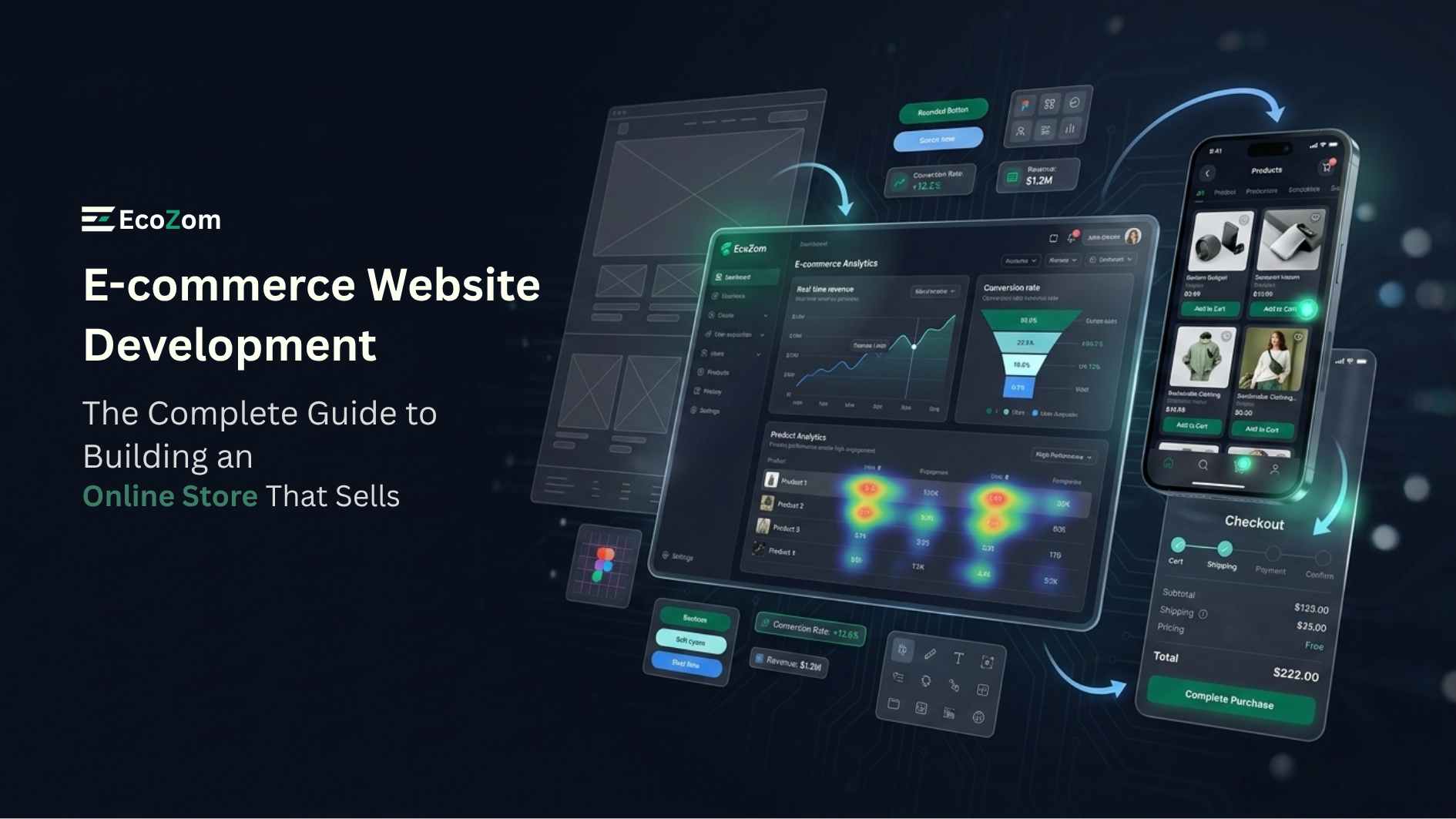
E-commerce Website Development: The Complete Guide to Building an Online Store That Sells
Global e - commerce revenue exceeded $6.3 trillion in 2024 and continues growing at 9% annually. Yet the average e-commerce conversion rate sits at just 2–4%, meaning the vast majority of visitors leave without purchasing. The difference between stores at the top of the conversion curve (achieving 5–8%+) and those at the bottom is rarely product quality or price — it is the quality of the digital shopping experience.
This comprehensive guide covers every dimension of building a high - performing e - commerce website, from platform selection and information architecture to performance optimization and post - launch growth strategies.
Choosing the Right E - commerce Platform
Shopify: Best for Most Direct - to - Consumer Brands
Shopify powers over 4.6 million online stores globally and is the default choice for most DTC brands.Its strengths include: a mature ecosystem of 8,000 + apps, built -in payment processing(Shopify Payments), headless commerce capabilities via the Storefront API, and an exceptional mobile app for store management.Shopify Checkout has undergone extensive conversion rate optimization and consistently outperforms custom checkout implementations.Pricing starts at $29 / month(Basic) with 2.9 % + 30¢ per transaction on the starter plan.
WooCommerce: Best for Content - First Stores
WooCommerce(built on WordPress) is the right choice when content marketing is your primary customer acquisition strategy.Its native integration with WordPress's exceptional content management capabilities, combined with the vast plugin ecosystem, makes it the most flexible option. However, this flexibility comes with complexity — WooCommerce requires more technical maintenance than Shopify.
Custom E - commerce(Next.js + Medusa / Commercetools)
For high - volume brands, D2C businesses with unique requirements, or businesses requiring deep ERP / PIM integration, a custom headless commerce architecture delivers unmatched performance and flexibility.Building on Next.js with a headless commerce backend(Medusa, Commercetools, or Shopify Headless) achieves superior Core Web Vitals scores — critical for organic search in competitive categories — while enabling custom functionality that SaaS platforms cannot accommodate.
Product Page Optimization: Where Conversions Are Won and Lost
Product pages are the highest - leverage pages on any e - commerce site.Converting a product page from 2 % to 4 % conversion rate doubles revenue without additional traffic.Key product page elements that drive conversion:
- Product photography: Multiple high-resolution images (6–10 minimum), lifestyle context shots showing the product in use, 360-degree views or zoom functionality, and video demonstrations for complex products.
- Social proof: Customer reviews prominently displayed (average rating and total count above the fold), video testimonials for high-consideration purchases, and UGC (user-generated content) galleries showing real customers using the product.
- Scarcity and urgency: Real-time inventory counts ("Only 3 left"), shipping countdown timers for same-day shipping cutoffs, and low-stock indicators ethically applied to genuine inventory situations.
- Variant selection UX: Visual swatches for color selection (not dropdown menus), size guides accessible in-context, and clear indication of unavailable variants rather than hiding them.
- Add - to - cart flow: The ATC button should be large, high-contrast, and sticky on mobile scroll. Offer a "Buy Now" shortcut to checkout for high-intent visitors, and an "Add to Wishlist" option for window shoppers.
Checkout Optimization: Removing the Last Friction Points
Cart abandonment averages 70 % across e - commerce globally.A significant portion of this is recoverable through checkout optimization:
- Guest checkout: Requiring account creation is the single most common checkout abandonment cause. Always offer guest checkout with an optional account creation prompt post-purchase.
- Address autocomplete: Implement Google Places Autocomplete for address fields to reduce input effort by 50–60%.
- Shipping calculator: Show shipping costs as early in the funnel as possible — shipping cost surprises at checkout cause 48% of cart abandonments.
- Trust signals at checkout: Security badges (SSL, PCI compliance), accepted payment method logos, money-back guarantee reminders, and customer service contact information all reduce checkout hesitation.
- One - click purchasing: Shop Pay, Apple Pay, and Google Pay reduce checkout friction to a single authentication step, increasing mobile conversion rates by 1.6–2x for stores that implement them.
E - commerce SEO Strategy
E - commerce SEO has unique challenges: product pages have thin content compared to editorial pages, inventory changes create pages that appear and disappear, and duplicate content from manufacturer descriptions is pervasive.A winning e - commerce SEO strategy addresses all of these:
- Category page SEO: Category pages (e.g., "Men's Running Shoes") are typically the highest-traffic, highest-value pages to rank for. Write unique, keyword-rich category descriptions and optimize title tags, H1s, and image alt text systematically.
- Product page SEO: Write unique product descriptions rather than using manufacturer copy. Include semantic keywords related to material, size, use case, and customer pain points that the product solves.
- Technical e - commerce SEO: Implement canonical tags on filtered and sorted URL variants, manage pagination with rel=prev/next or canonical to root, and create XML sitemaps that update dynamically with inventory changes.
- Schema markup: Product schema with price, availability, and aggregate rating enables rich results in Google Shopping and organic SERPs, increasing CTR by 20–30%.
Site Speed and Performance for E - commerce
A 1 - second delay in page load time reduces e - commerce conversion rates by 7 %.For a store generating $100,000 / month, improving load time from 5 seconds to 2 seconds can recover $21,000 + in monthly revenue.E - commerce performance priorities:
- Optimize product image delivery with lazy loading, WebP format, and responsive srcset
- Defer third - party scripts(analytics, chat widgets, review widgets) until after the initial page render
- Implement server - side rendering or static generation for product and category pages
- Use a CDN for all static assets and images with long cache TTLs
- Preload critical resources including fonts, hero images, and above - the - fold CSS
Post - Purchase Strategy: Maximizing Customer Lifetime Value
Acquiring a new customer costs 5–7x more than retaining an existing one.The most profitable e - commerce businesses focus intensely on post - purchase experience to maximize customer lifetime value:
- Order confirmation optimization: Use the order confirmation page and email as a relationship-building moment, not just a transaction receipt. Include personalized product recommendations, a referral invitation, and a review request.
- Email retention sequences: 7-day post-purchase check-in, 30-day usage tips, 90-day replenishment reminder (for consumables), and 6-month win-back campaign for inactive customers.
- Loyalty programs: Point-based programs increase repeat purchase rates by 20–30% and average order value by 15–20%.
- Personalization: Use purchase history to power personalized product recommendations via email, on-site, and in retargeting campaigns — personalized recommendations drive 35% of Amazon's revenue.
Frequently Asked Questions About E - commerce Development
How much does it cost to build an e - commerce website ?
A professionally designed Shopify store: $5,000–$20,000 for design and development.A custom headless commerce platform: $30,000–$150,000 +.Ongoing monthly costs include platform fees($29–$299 / month for Shopify), payment processing(2.4–2.9 % + fixed fee per transaction), email marketing, and advertising.
How long does e - commerce development take ?
A well - scoped Shopify store with custom design can launch in 4–8 weeks.A custom headless platform with complex integrations(ERP, PIM, loyalty program) typically takes 12–24 weeks depending on scope.
Build an E - commerce Store Engineered for Growth
Our e - commerce development team builds online stores that combine conversion - optimized UX, technical SEO, and performance excellence to maximize the value of every visitor.From Shopify customization to full custom platforms, we deliver solutions that grow with your ambitions.
Contact us for a free e - commerce consultation and discover how the right technical foundation can transform your online store's performance.