Digital Marketing Strategy for 2025: How to Generate Leads, Build Brand Awareness, and Drive Revenue
Digital Marketing Strategy for 2025: How to Generate Leads, Build Brand Awareness, and Drive Revenue
Digital marketing in 2025 is more complex, more competitive, and more measurable than at any point in history.With over 5.4 billion internet users globally, the digital landscape offers unprecedented reach — but also unprecedented noise. The brands that consistently win online are not those with the biggest budgets; they are those with the most coherent, data-driven strategies.
This comprehensive guide provides a battle - tested digital marketing framework applicable to any business size and industry.Whether you are a startup looking to acquire your first 100 customers or an established company seeking to optimize your marketing ROI, these strategies are your roadmap to measurable digital growth.
The Digital Marketing Ecosystem in 2025
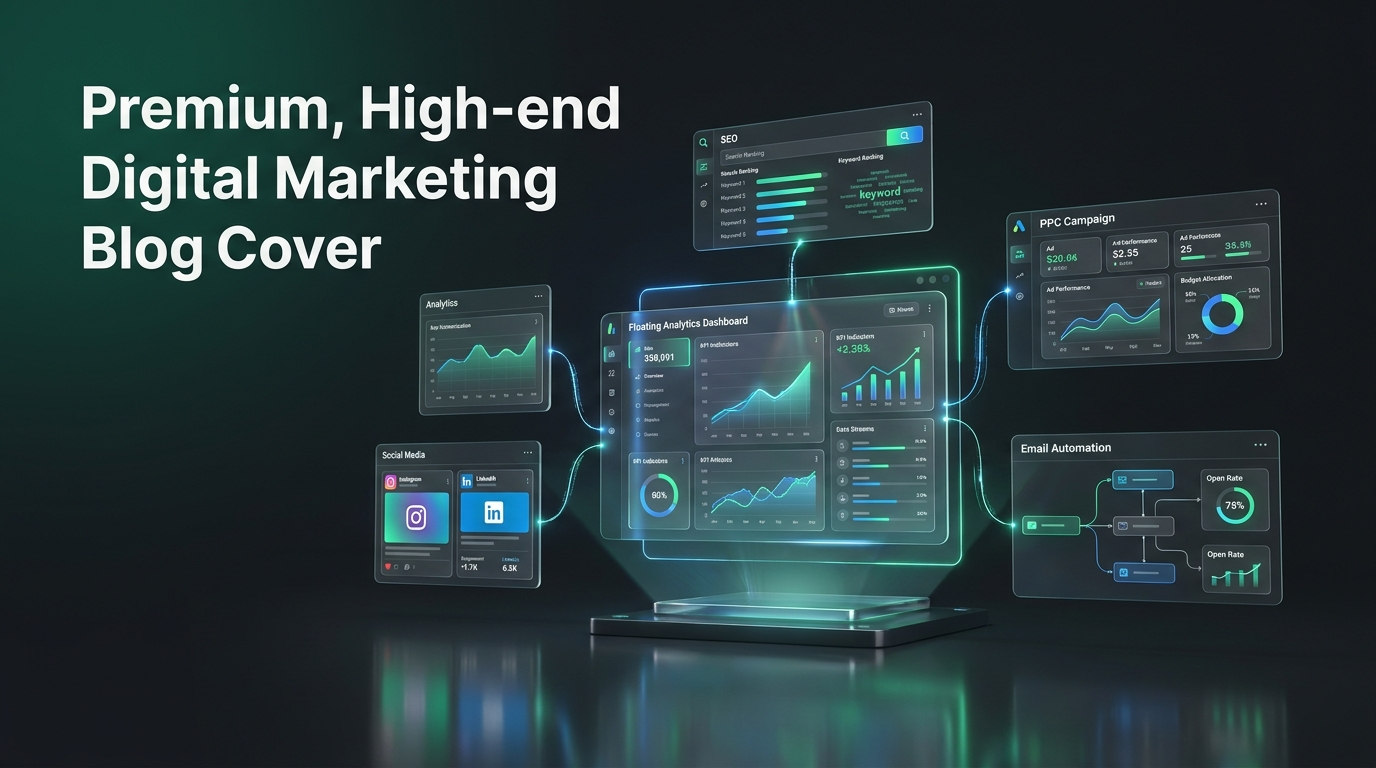
Effective digital marketing is not about being everywhere — it is about being where your customers are, with the right message, at the right moment in their decision journey.The ecosystem consists of five interconnected channels, each serving different stages of the customer acquisition funnel:
- Organic Search(SEO): Building long-term, compounding traffic through search engine optimization
- Paid Search and Social(PPC): Immediate, intent-driven traffic with precise audience targeting
- Content Marketing: Creating valuable content that attracts, educates, and converts prospects
- Social Media Marketing: Building community, brand awareness, and direct engagement
- Email and Marketing Automation: Nurturing leads and retaining customers at scale
The most effective digital marketing programs orchestrate all five channels into a unified customer journey, with each channel reinforcing the others rather than operating in isolation.
Building Your Digital Marketing Foundation: The Customer Avatar
Every effective marketing campaign begins with an obsessively detailed understanding of the ideal customer.Not a demographic description, but a full psychological profile: What problems keep them up at night ? What goals drive their decisions ? What information sources do they trust ? What objections prevent them from buying ? What language do they use to describe their pain ?
Create 2–3 detailed buyer personas incorporating: job role and decision - making authority, industry and company size, primary pain points your solution addresses, evaluation criteria for solutions in your category, preferred communication channels, and typical objections during the buying process.Every marketing decision — channel selection, content topics, ad creative, email subject lines — should be informed by these personas.
SEO: Your Long - Term Traffic Engine
SEO is the highest - ROI digital marketing channel over a 12 - month + horizon.Unlike paid advertising, SEO compounds — content and backlinks acquired today continue delivering traffic and leads for years.A well - executed SEO strategy for a business website achieves a cost - per - acquisition that is 3–5x lower than paid channels over a 24 - month period.
The modern SEO content strategy for businesses: create comprehensive, expert - authored content targeting commercial - intent keywords(e.g., "best [solution category] for [target user]" and "[solution] vs [competitor]") and informational keywords that your ideal customer searches early in their awareness journey.Use internal linking to connect related content and build topical authority.Update existing content every 6–12 months to maintain freshness signals.
PPC Advertising: Immediate, Measurable, Scalable
Google Ads: Intent - Based Advertising
Google Search Ads intercept users at the exact moment they are actively seeking a solution.For businesses with products or services in active market demand, Google Ads delivers the highest - quality traffic of any paid channel.Key optimization factors in 2025: Performance Max campaigns with comprehensive asset groups, responsive search ads with 8–10 headline variations for algorithmic optimization, remarketing lists for search ads(RLSA) to adjust bids for site visitors, and conversion tracking through Google Analytics 4.
Meta Ads: Awareness and Retargeting at Scale
Facebook and Instagram advertising remains the dominant channel for visual brand building and audience - based targeting.In 2025, Meta's Advantage+ AI campaign optimization has made manual targeting less necessary — instead, investing in creative quality (video, carousel, static image variations) is the primary lever for campaign performance. Meta advertising is particularly powerful for retargeting website visitors and lookalike audiences built from your best customers.
Content Marketing: The Trust - Building Machine
Content marketing has evolved from "writing blog posts" to a sophisticated ecosystem of educational content designed to guide prospects through the entire buyer journey.An effective content marketing program in 2025 includes:
- Blog articles and SEO content: Long-form, expert content targeting search keywords at all funnel stages
- Video content: YouTube tutorials, explainer videos, and case study narratives that build expert authority
- Lead magnets: High-value downloadable resources (templates, calculators, guides, industry reports) that convert visitors to email subscribers
- Webinars and virtual events: Live or recorded educational sessions that demonstrate expertise and generate qualified leads
- Case studies and social proof: Detailed success stories that overcome purchase objections and demonstrate proven results
Social Media Marketing: Community and Brand Building
In 2025, social media marketing success requires platform specialization.The days of posting the same content everywhere simultaneously are over.Each platform demands unique content strategies:
- LinkedIn: B2B authority building through thought leadership articles, industry insights, behind-the-scenes company culture, and engagement with potential clients and partners. The algorithm favors personal profiles over company pages, making founder and employee advocacy essential.
- Instagram and TikTok: Short-form video content demonstrating product value, behind-the-scenes processes, and authentic brand personality. User-generated content and creator partnerships outperform polished brand content in organic reach.
- X(Twitter): Real-time engagement in industry conversations, thought leadership through threading, and responsive customer service for technology brands.
Email Marketing and Automation: Your Highest - ROI Channel
Email marketing delivers an average ROI of $36 for every $1 spent — higher than any other digital channel.In 2025, effective email marketing means moving beyond broadcast newsletters to sophisticated behavioral automation:
- Welcome sequences: 5–7 email onboarding flows that educate new subscribers on your value proposition and move them toward their first purchase or consultation.
- Lead nurture sequences: Automated sequences triggered by content downloads, webinar registrations, or specific page visits that deliver relevant educational content over 30–60 days.
- Post - purchase sequences: Onboarding emails, usage tips, and upsell/cross - sell campaigns that maximize customer lifetime value.
- Re - engagement campaigns: Win-back campaigns for inactive subscribers before removing them from your list to maintain deliverability.
Marketing Analytics: Measuring What Matters
The difference between digital marketing as an expense and digital marketing as an investment is measurement.Implement a measurement stack including Google Analytics 4(website behavior and conversion tracking), Google Search Console(organic search performance), platform - native analytics(Meta Ads Manager, Google Ads), and a CRM(HubSpot, Salesforce, Pipedrive) to track leads through to closed revenue.
Define your North Star KPIs: cost per qualified lead, customer acquisition cost(CAC) by channel, customer lifetime value(LTV), LTV:CAC ratio, and time - to - payback.These metrics tell you not just what is working but where to allocate budget for maximum return.
Frequently Asked Questions About Digital Marketing
How much should a business spend on digital marketing ?
Industry benchmarks suggest allocating 7–15 % of revenue to marketing for established businesses and 15–25 % for high - growth startups.Early - stage businesses should prioritize SEO and content marketing for long - term compounding returns, with paid advertising layered in once core messaging and conversion rates are validated.
How do I know which digital marketing channel to prioritize ?
Channel prioritization depends on your product, sales cycle, and budget.For immediate results with a defined budget, start with Google Search Ads.For long - term sustainable growth, invest in SEO and content marketing from day one.For brand building and B2B relationship development, LinkedIn organic and targeted advertising.Run small experiments across multiple channels and double down on the highest - performing based on CAC and LTV data.
Accelerate Your Digital Growth
Our digital marketing team builds integrated strategies that turn digital channels into predictable revenue engines.From SEO to paid advertising to content marketing, we manage the full funnel and report on the metrics that matter to your business outcomes.
Request your free digital marketing audit and receive a customized growth roadmap identifying your highest-impact opportunities.