Brand Identity Design: How to Build a Brand That Stands Out and Earns Trust
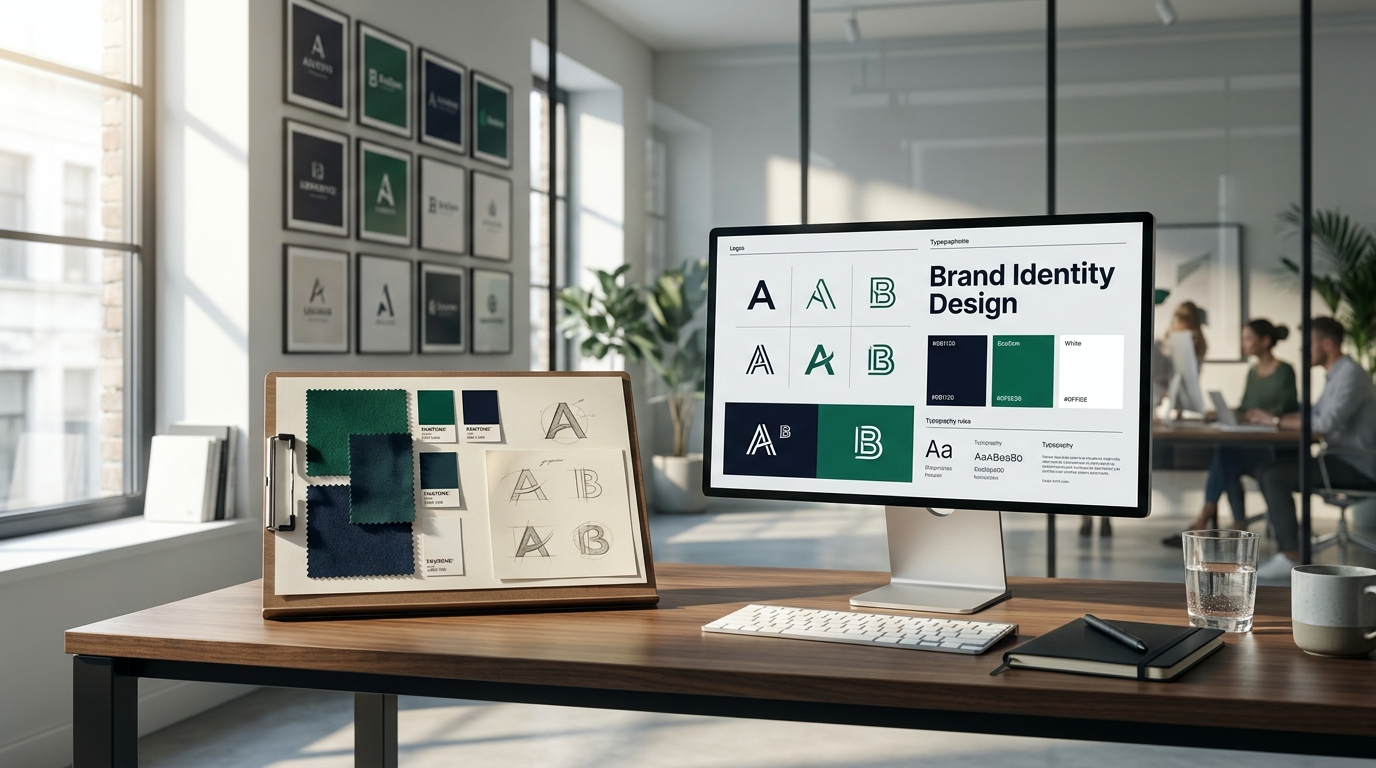
Brand Identity Design: How to Build a Brand That Stands Out and Earns Trust
In a market where consumers are exposed to over 5,000 brand messages per day, the businesses that earn lasting customer relationships are those that have invested in a coherent, authentic brand identity . Brand identity is not just a logo — it is the complete visual and verbal system through which your business communicates its values, personality, and promises to the world.
Companies with strong brand identities command premium pricing(customers pay up to 20 % more for recognized, trusted brands), achieve higher customer retention rates, attract better talent, and build compounding organic growth through word - of - mouth that competitors cannot replicate.This guide covers the complete brand identity development process, from strategic foundations to practical visual design systems.
What Is Brand Identity and Why Does It Matter ?
Brand identity is the collection of visual and verbal elements that a company deliberately creates to convey its desired image to its audience.It is distinct from:
- Brand image: How consumers actually perceive the brand (the outcome of brand identity efforts)
- Brand equity: The commercial value of the brand's reputation (the financial expression of successful brand building)
- Branding: The ongoing process of managing the brand identity and its application across all touchpoints
Strong brand identity creates multiple business advantages: price premium capability, faster new product adoption(customers extend trust from known products to new ones), reduced customer acquisition costs(strong brands receive more organic search and referral traffic), and resilience during crises(trusted brands recover faster from negative events).
Phase 1: Brand Strategy — The Foundation
Brand Purpose and Mission
Simon Sinek's Golden Circle framework remains foundational: Why does your company exist beyond making money? How do you uniquely deliver on that purpose? What specifically do you sell? Brands that articulate a compelling "why" create emotional connection that transcends product features. Patagonia's "We're in business to save our home planet" is a purpose statement that drives purchasing decisions, employee engagement, and product development simultaneously.
Target Audience Deep Research
Brand strategy requires obsessive understanding of the intended audience — their values, aspirations, fears, aesthetic preferences, and the brands they already love.This research informs every visual and verbal brand decision.Qualitative research methods(depth interviews, focus groups, ethnographic observation) reveal the emotional and psychological dimensions that surveys cannot capture.
Competitive Brand Landscape Analysis
Map the brand identities of all significant competitors across two to three axes that matter in your category(premium vs.accessible, technical vs.approachable, traditional vs.innovative).Identify whitespace — areas of the perceptual map unclaimed by established competitors.Your brand's visual territory should occupy a distinct position that differentiates you authentically while remaining relevant to your target audience.
Brand Positioning Statement
Synthesize your strategy into a crisp positioning statement: "For [target audience], [brand name] is the [category] that [key benefit] because [reason to believe]." This statement is the north star for all subsequent creative decisions.Every visual element should reinforce the positioning.
Phase 2: Verbal Identity — Finding Your Brand Voice
Brand Personality
Define your brand as if it were a person.What are its three to five most prominent personality traits ? Mailchimp is friendly, quirky, and expert.Apple is minimalist, innovative, and premium.Patagonia is passionate, authentic, and activist.These personality traits directly inform tone of voice, word choice, and communication style across all touchpoints.
Tone of Voice Guidelines
Document how your brand speaks: the formality level, the vocabulary tier, the sentence structure preference, what it would and would not say.Include examples of on - brand and off - brand copy for common scenarios(website headlines, social posts, error messages, customer service responses).A brand voice guide makes every person who writes for the brand — from the CEO to a customer service agent — produce consistently on - brand communication.
Phase 3: Visual Identity — The System
Logo Design: Principles and Process
The logo is the most visible expression of brand identity but only one component of the visual system.Effective logos are:
- Simple: Memorable at a glance and reproducible at any size from favicon to billboard
- Distinctive: Visually unique and not easily confused with competitors
- Appropriate: Visually consistent with the brand's positioning (a financial services brand should not have an exuberant, colorful logo)
- Timeless: Designed to remain relevant for 10+ years without trend dependency
- Versatile: Functions effectively in color, black and white, on light and dark backgrounds, at small and large sizes
The logo design process begins with brand strategy, moves to conceptual sketching(divergent ideation of 30–50 concepts), then digital refinement of 5–8 strongest directions, client feedback and iteration, and final production files in all required formats(SVG, PNG, EPS).
Color Palette Strategy
Color is the most immediately processed brand signal — viewers make subconscious associations with color before reading a single word.Develop a color palette including:
- Primary brand color: The dominant color associated with the brand across all touchpoints. Should be distinctive in the competitive landscape and appropriate to the brand's emotional positioning.
- Secondary colors: 1–3 supporting colors that harmonize with the primary and expand the design system's expression range.
- Neutral palette: Background and text colors (off-whites, light grays, dark grays, near-blacks) that ensure readability and versatility.
- Functional colors: Success green, warning yellow, error red — standardized across digital products.
Typography System
Typography communicates brand personality before a single word is read.A complete brand typography system defines:
- Display font: For large headlines, typically the most personality-forward font choice.
- Body font: Highly legible, appropriate for extended reading at smaller sizes.
- Typographic hierarchy: Defined sizes, weights, and line heights for H1 through H6, body copy, captions, and UI labels.
Brand Photography Style
Photography style guidelines ensure visual consistency across all marketing materials.Define: color treatment(warm / cool, desaturated / vibrant), subject matter and composition preferences, lighting style(natural / studio, soft / dramatic), and what should be avoided(certain poses, locations, or aesthetics that conflict with brand positioning).
Phase 4: Brand Guidelines and Implementation
The brand guidelines document is the master reference for everyone who creates brand materials — internal teams, freelancers, agencies, and technology partners.Comprehensive guidelines include: logo usage rules(minimum sizes, clear space, approved variations, forbidden usage), color values(HEX, RGB, CMYK, Pantone), typography specifications, photography style guide, design pattern library(icons, illustration style, graphic elements), and real - world application examples.
Frequently Asked Questions About Brand Identity
How long does brand identity development take ?
A comprehensive brand identity project(strategy + verbal + visual) typically takes 8–16 weeks.The research and strategy phase takes 2–4 weeks, conceptual development 3–5 weeks, refinement and feedback 2–4 weeks, and guidelines production 1–3 weeks.
When should a business rebrand ?
Rebranding is appropriate when: the current identity no longer reflects the company's evolution, a major strategic pivot (new market, new audience, acquisition), consistent negative brand perception that impedes growth, or the visual identity is technically outdated (low resolution assets, no dark mode versions, accessibility failures).
Build a Brand That Lasts
Our brand identity team combines strategic thinking, deep audience research, and exceptional design craft to build brand systems that differentiate, resonate, and endure.From startups establishing their first brand identity to established businesses seeking strategic rebranding, we deliver brand systems that become enduring business assets.
Schedule a brand strategy consultation to discuss your brand challenges and discover how the right identity system can transform your business's market position.